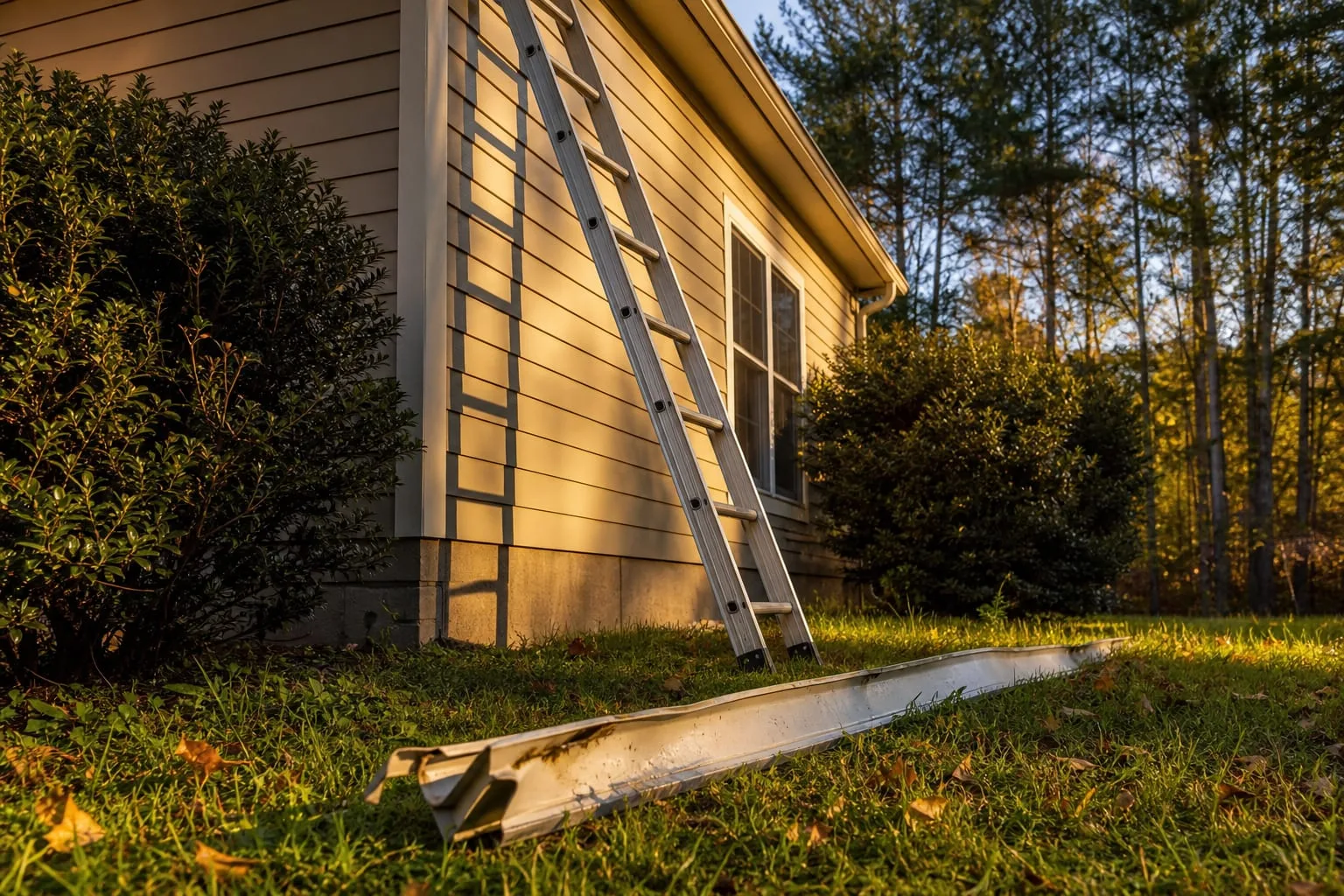
A tree limb comes down and takes a section of gutter and some soffit with it, and a contractor quotes a figure that sits somewhat above the deductible. The instinct is to file, since that is what the policy is for and the premium has been paid for years without a claim. The arithmetic that decides this properly is not complicated and almost nobody runs it, because it requires comparing a known payment today against an unknown cost spread across several renewals, and the second half of that comparison is the part people leave out.
What a Claim Actually Does to a Renewal
A paid claim generally affects a homeowners policy in two ways. The first is the loss of a claim free discount, which is a real and often substantial line on the premium. The second is a surcharge applied for a period of years, commonly three to five, after which it drops off. Neither is arbitrary punishment. A property with a claim history is statistically a property more likely to produce another one, and pricing reflects that.
The effect that people fail to anticipate is at the shopping stage rather than at renewal. Claims are recorded in an industry database that other carriers consult, which means a claim follows the property and the person for several years regardless of who insures it. Somebody who files, absorbs the surcharge, and then goes looking for a better price discovers that the alternatives are pricing the same history, and the ability to shop out of the increase is exactly what has been reduced.
The Deductible Math, Done Honestly
Start with the recoverable amount, which is the repair cost minus the deductible, and never the repair cost itself. A claim on a repair costing modestly more than the deductible recovers very little, and that small recovery is being compared against several years of higher premium plus the constraint on shopping. Written out that way, the answer for small claims is almost always to pay it and say nothing, and the calculation takes about two minutes on the back of the contractor's estimate.
The comparison changes shape as the number grows. Once the recoverable amount is several times the annual premium, the arithmetic reverses decisively and filing is obviously correct. The awkward zone is in between, and the honest way through it is to ask the agent what a claim of this size would do to this policy, which is a question agents answer routinely, without any of it counting as a claim, and which homeowners almost never think to ask before deciding.
The Claims That Should Almost Always Be Filed
Three categories are not really discretionary. Anything involving injury to another person belongs with the insurer immediately, because the liability exposure is open ended and the policy includes the cost of defending it, which is frequently worth more than the payment itself. Anything with a structural dimension, a fire, a major water event, a tree through a roof, is beyond what a household should absorb and is exactly the risk the policy exists to carry.
The third is anything where the full extent is not yet known. Water damage in particular has a habit of being larger than it appeared in the first week, and a homeowner who paid for the visible repair and later discovers the subfloor has been quietly failing is in a considerably worse position than one who reported it at the time. Reporting is not the same as claiming, which is the distinction that resolves most of these situations.
Reporting, Claiming, and the Difference Between Them
Most policies require prompt notice of a loss as a condition of coverage, and notice is not the same as a demand for payment. A homeowner can report an event, receive a claim number, and then decide after obtaining estimates not to pursue it. Whether an insurer records that as a claim varies, and it is a fair question to ask directly when making the call, phrased as an inquiry about how the event will be recorded if no payment is made.
What is genuinely damaging is saying nothing about an event that later turns out to matter. An insurer presented with a claim for damage that began two years earlier and went unreported has grounds to decline on the notice provision alone, without ever reaching the question of whether the peril was covered. Silence feels like the cautious option, because saying nothing appears to avoid attention, and it is frequently the considerably more expensive of the two.
The Number to Have Before Any of This Happens
The single most useful preparation is knowing what the deductible actually is, because a great many households do not and are surprised at the worst moment. Alongside it, knowing whether the policy pays replacement cost or actual cash value changes the arithmetic entirely, since the second pays out depreciated value and makes small claims even less worth filing. Both facts sit on the declarations page and take two minutes to check on an ordinary evening. The limb through the gutter is not a difficult decision for anybody holding those two numbers, and it is a genuinely difficult one for anybody looking them up while a contractor waits for an answer.