Picture the underside of a kitchen sink after a supply line has let go overnight: the cabinet floor swollen, the flooring beyond it lifting, and a drying company quoting a figure with four digits in it. Almost every expensive household failure has a cheap ancestor, and the ancestors are boring, visible, and known. What separates the households that meet them from the ones that do not is rarely diligence in general. It is having a short list of the specific jobs where an hour of attention prevents a genuinely large number, in the order the gap opens.
Downspout Extensions and What Sits Against the Siding
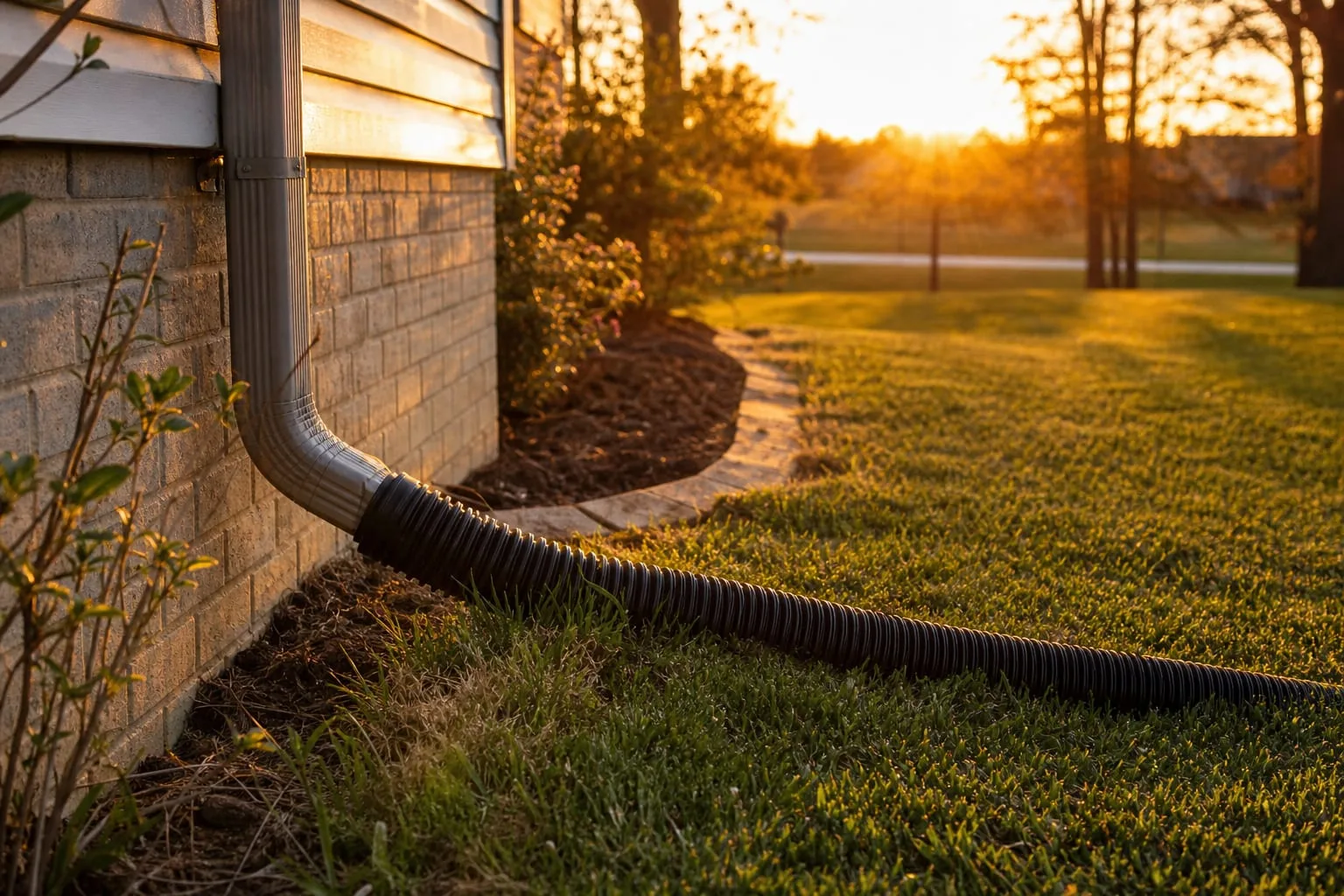
Water landing beside a foundation is the single most expensive thing an ordinary house does to itself, and the fix costs the price of a few lengths of plastic pipe. A downspout that discharges within a foot of the wall is saturating the soil that the foundation sits in, and over several seasons that produces settlement, a wet basement, or both. Extending each one several feet out, and sloping the ground away from the wall, is an afternoon with a shovel.
The same afternoon should deal with what is stacked against the house. Firewood, bagged mulch piled above the siding line, a raised bed built tight to the wall, and shrubs grown into the cladding all hold moisture against material that was designed to dry out between rains. That is how siding rots from behind and how insects find their way in, and none of it is visible until somebody moves the pile and finds the damage that has been developing underneath it for four years.
Washing Machine Hoses and Toilet Supply Lines
These are the cheapest components in a house and the ones responsible for the largest share of sudden interior water damage. A rubber washing machine hose has a service life and it fails while nobody is home, at full household pressure, for as long as it takes somebody to come back. Braided stainless replacements cost very little, take about twenty minutes for the pair, and remove the failure mode almost entirely, which is a rare instance of a household risk that can simply be bought out of existence for the price of a takeaway meal.
Toilet supply lines behave the same way and get replaced even less often, particularly the plastic nut at the top that becomes brittle with age. While under there, the shutoff valve is worth turning, because a valve that has not moved in fifteen years will not move on the night it is needed either. Any valve that will not turn easily is a thing to fix on a Saturday rather than to discover at two in the morning with water spreading across a floor.
The Dryer Vent Nobody Has Opened
Lint accumulates in dryer ducting steadily and invisibly, and a restricted vent produces two separate problems. The first is that the appliance runs far longer to do the same work, which is a slow and permanent increase in an electricity bill. The second is that the accumulation is a fuel, sitting next to a heat source, in a part of the house nobody looks at. Household dryer fires are common enough that lint buildup is among the recurring appliance hazards the Consumer Product Safety Commission concerns itself with, and they are close to entirely preventable.
Cleaning it is an hour with a brush kit that costs less than a single service call. Disconnect the duct at the back of the machine, clear the run, check the exterior flap actually opens and closes, and replace any flexible foil or plastic ducting with rigid metal while the panel is off. Houses with a long run to an exterior wall need this more often than the once a year that suits everybody else.
The Water Heater and the Valve Nobody Tests
Draining a few gallons from the bottom of a tank once a year removes the sediment that insulates the burner from the water and shortens the life of the tank, and it takes about twenty minutes with a garden hose. The temperature and pressure relief valve on the side deserves the same visit: lifting the lever briefly confirms it is not seized, which matters because it is the device that prevents a tank from becoming dangerous when a thermostat fails.
Why the Gap Between an Hour and Four Figures Is So Wide
Every job on this list shares one feature, which is that the failure is sudden while the deterioration is gradual. Nothing warns anybody, because the warning would have to be noticed by somebody looking, and nobody looks at a dryer duct or a supply line in an ordinary week. The way households actually get this done is not resolve but attachment: pick two dates already in the calendar, the weekend the clocks change works well, and do the list then rather than deciding to be more attentive in general. The cabinet under the sink is not a story about neglect. It is a story about a twenty minute job that nobody had a reason to remember.