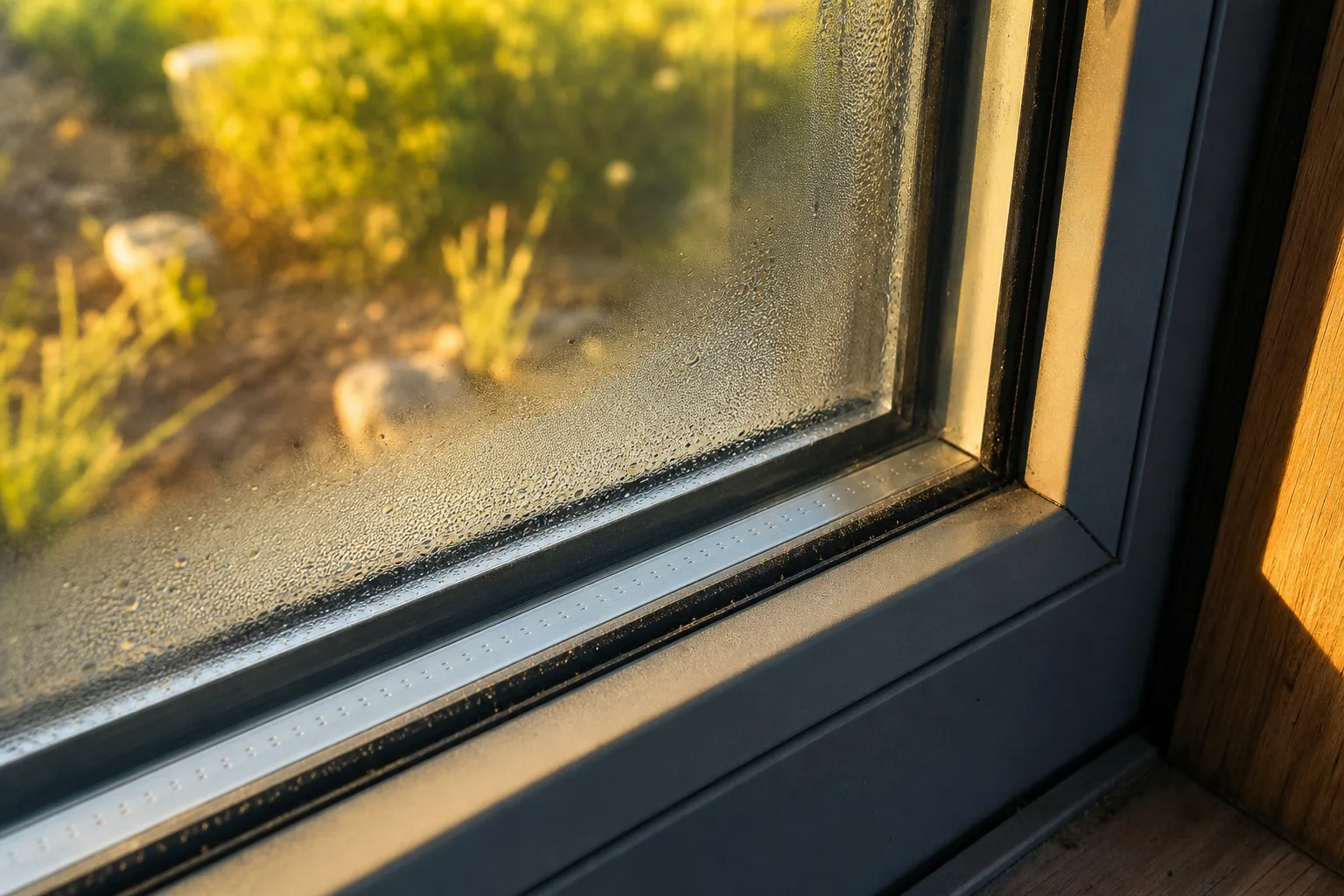
The first winter after a glazing job, everybody is happy. The rooms feel different, the draft near the sill is gone, and the bill looks like it bought something. The interesting year is the eighth. That is roughly when the quiet failures in a sealed glass unit start showing themselves, and when the question stops being how the windows perform and starts being who pays to fix the three that fogged. Owners who have been through two or three rounds of this know that the outcome is decided less by the glass and more by whether anyone kept the paperwork.
What the second pane is actually doing
A double glazed unit is two sheets of glass held apart by a spacer, with the gap sealed and usually filled with argon. The gap is the insulator. The glass barely insulates at all. Most of the performance comes from the dead air or gas in the cavity plus, on anything made in the last twenty years, a low-emissivity coating: a microscopically thin metallic layer that reflects heat back toward the side it came from. Installers shorten it to low-e and then never explain it again.
What that buys you is less heat moving through the window area. What it does not buy you is a fix for air moving around the window. A leaky frame, a failed perimeter seal, an unsealed gap between the rough opening and the jamb: none of that is improved by better glass, and all of it is what people actually feel. I have walked buildings where every unit was replaced and the complaints did not change, because the complaint was air infiltration at the frame and nobody addressed it. The glass was never the problem.
The honest version of the savings story is that glazing reduces heat loss through a modest percentage of the wall area, improves comfort near the window substantially, and cuts condensation on the interior face. Energy bills move. They rarely move the way a replacement quote implies, because the quote is comparing new glass to old glass and your bill is paying for a whole building.
The two labels that tell you what you bought
Every unit worth installing arrives with a performance label, and it carries two numbers that matter. U-factor is the rate heat passes through the whole assembly, glass and frame together. Lower is better. Solar heat gain coefficient, written as SHGC, is how much of the sun's heat gets through. Lower keeps a south or west exposure cooler in summer; higher is sometimes what you want on a north face in a cold climate.
Certification of those numbers runs through an independent ratings council, and the Department of Energy oversees the efficiency programs that reference them. The label is not decoration. It is the only document that states what the product was certified to do, and it is the thing to photograph before the sticker is peeled off and thrown in the dumpster, which is what happens on every job if nobody stops it.
There is a second marking, etched into the spacer or a corner of the glass: the manufacturer, the plant, and a date or lot code. That code is how a warranty claim gets matched to a production run seven years later. Write it down. On a commercial job, the glazing schedule should capture it for every opening.
How a sealed unit fails, and when
Failure in a double glazed unit is almost always the edge seal. The spacer holds a desiccant that absorbs the small amount of moisture sealed inside at the factory. The perimeter seal keeps outside moisture out and argon in. Over years of thermal cycling, that seal works. The desiccant saturates. Moisture enters, condenses between the panes on a cold morning, and you get the haze that no amount of cleaning touches.
Year eight to year twelve is the common window, earlier on south and west elevations where the cycling is harshest, earlier again where units sit in standing water because the frame drainage is blocked. Drainage is the single biggest predictor I have seen. Weep holes packed with caulk by a well-meaning painter will take years off a unit's life, and nobody connects the two events when the fog appears.
Argon loss is slower and quieter. A unit can lose fill gas gradually and never fog, just perform a little worse each year. There is no way to see it. This is why the installation record matters more than the sales literature: it is the only evidence of what was supposed to be in there.
The file that makes a claim straightforward
Owners who handle this well keep one folder per property, and it holds four things. The signed order or contract that lists product line, glass makeup and gas fill by opening. Photographs of the performance labels before removal. The glazing schedule or window takeoff keyed to a floor plan, so opening 2-14 means something to a stranger. And the written warranty itself, with its start date and its terms on labor, which is almost always separate from and shorter than the coverage on the glass.
That last distinction catches people. A twenty-year warranty on the sealed unit commonly pairs with one or two years of labor. At year eight the glass is free and the crew is not, and the invoice looks nothing like what the owner expected. Firms that handle commercial glass services at scale usually hold the schedule and the warranty terms on file themselves, which is why replacing a handful of fogged units in a managed building is often a phone call rather than an investigation.
Add a maintenance note once a year: check that weep holes are clear, that the perimeter sealant has not cracked, that no sprinkler head is hitting the same elevation every morning. Five minutes per opening. It is the cheapest thing in the file and it is what pushes the failure year out past the warranty discussion entirely.
Deciding what to replace and when
A fogged unit is not an emergency. It loses some insulating value and it looks bad, and that is the whole of it. The frame, sash and hardware are usually fine. On most systems the sealed unit can be swapped without touching the frame, which is a fraction of the cost of a full window replacement and a fraction of the disruption.
So the useful decision at year eight is narrow: replace the failed units, confirm the drainage, and log the new lot codes against the openings. That keeps the asset on a rolling replacement rather than a single expensive event a decade out. The owners who end up tearing out an entire elevation at once are almost always the ones who had no record of what went in, and no way to claim against it.
Glass is one of the few building materials that tells you exactly when it is unhappy. It fogs. Everything else about its performance is invisible and has to be written down at the moment of installation or not at all. The twenty minutes spent photographing labels on install day is the highest-return work on the entire job.