The machine arrives on a pallet. Somebody signs for it, somebody else reads the manual, and within a week it is on the schedule. What usually does not happen in that week is anyone checking whether the person assigned to run it is permitted to run it in that state, under that supervision arrangement, at that depth setting. That check is cheap before the first appointment and expensive afterward, and the bill rarely arrives labeled as a licensing problem. It arrives as a canceled appointment block, a declined insurance renewal, a refund, or a board letter that takes eleven months to resolve.
Most of the confusion comes from treating two separate approvals as one. They are issued by different bodies, for different things, and neither one covers the other.
The license covers the person. The clearance covers the device.
A state board issues a license to a person: an esthetician, a master esthetician in the states that recognize that tier, a cosmetologist, a nurse, a physician assistant, a physician. That license defines scope of practice, meaning the list of things that person may legally do and the conditions attached. Scope of practice is the term that does all the work in this subject, and after this paragraph it is just the rules.
Separately, the U.S. Food and Drug Administration oversees medical devices and is responsible for the marketing clearances that let a manufacturer make specific claims about what a machine does. A clearance says something about the device. It says nothing at all about who may hold the handpiece in Boise versus Baton Rouge. Vendors are not always careful about that distinction in a sales conversation, and a brochure that says a unit is cleared for a given indication is not telling you your front-desk hire can run it.
So you have two documents that look like permission and overlap almost nowhere. The everyday consequence is a clinic that buys correctly and staffs incorrectly, then discovers the mismatch during a complaint investigation rather than during procurement.
Same machine, three states, three different staffing plans
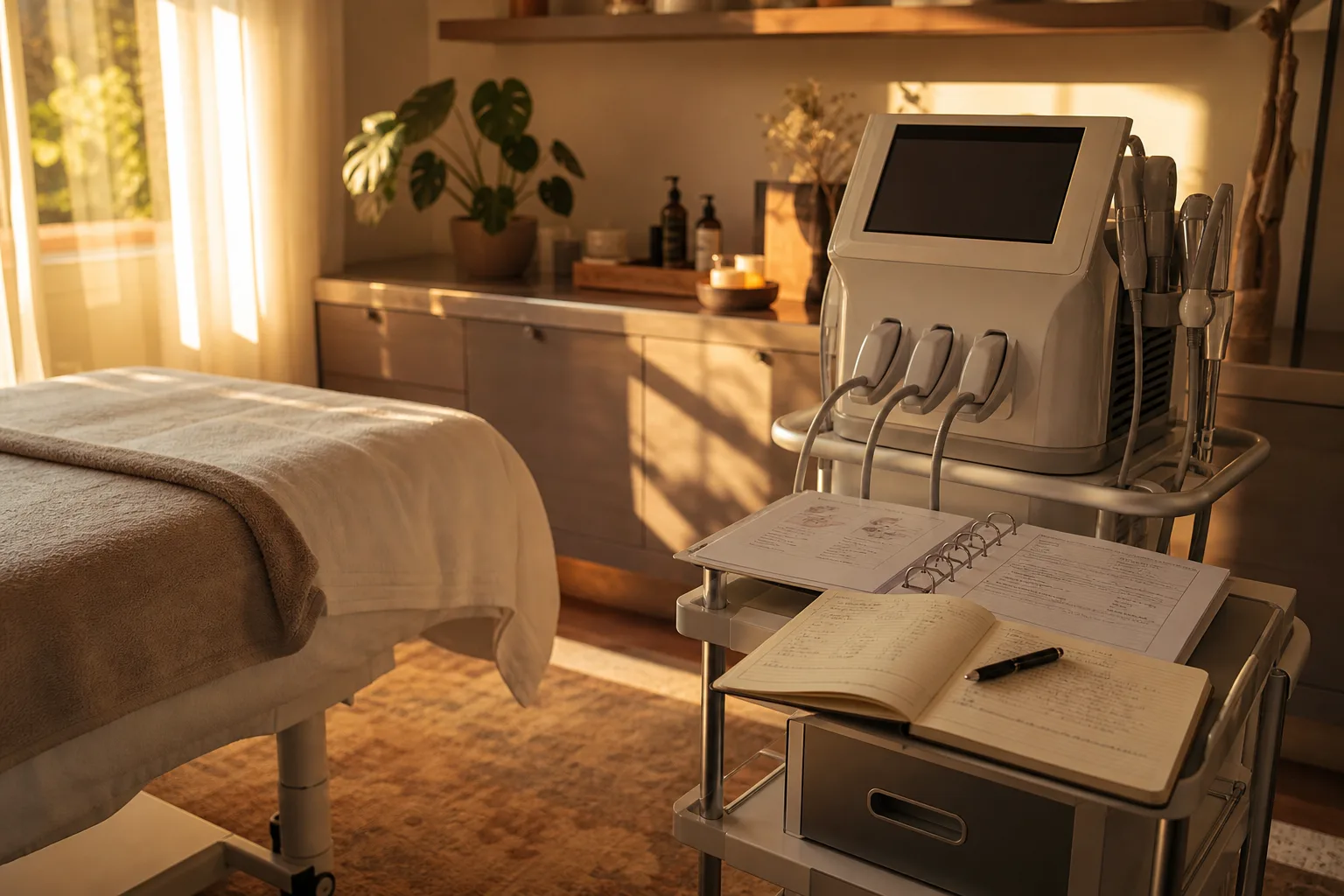
Take a single unit with a few modules on it: a vacuum-assisted cleansing head, a radiofrequency applicator, an LED panel, maybe an ultrasonic element. In one state, every module sits comfortably inside an esthetician's authority and a solo operator runs the whole menu. Cross a line and the radiofrequency module becomes something that requires a medical director, a delegation agreement in writing, and a physician reachable within a defined time. Cross another and the device class itself is treated as medical, which means the treatment room, the recordkeeping and the consent forms all change, not just the staff roster.
Energy-based devices are where the regional split is widest. States differ on who may operate a laser, who may operate intense pulsed light, whether radiofrequency counts as an energy device at all, whether supervision must be on-site or merely available by phone, and whether the supervising clinician must have examined the client first. Some states run a separate certification for laser operation on top of the base license. Some say nothing in statute and leave it to board opinions and attorney general letters, which is harder to research and no less binding.
Practical consequence: the staffing model that works in one location does not port to a second location two states over, and the equipment list should be checked against the destination board before the lease is signed, not after. A clinic expanding across a state line is effectively opening a different business with the same sign.
What the rules change about the purchase itself
Local rules reach the buying decision in ways that have nothing to do with the treatment. Several states restrict the sale of certain classes of equipment to licensed purchasers, which means a unit that cost real money has a narrow resale market and that market is defined by whoever is allowed to own one. A device with a clear resale path in one state can be close to illiquid in another.
Insurance follows the same logic. A professional liability carrier will ask what modalities you offer and who performs them, and the answers are checked against the state rules, not against your internal training records. A unit added mid-policy and never declared is a coverage question waiting to be asked at the worst time.
This is where it pays to buy from a supplier that sells into the professional channel and asks for license documentation before shipping, because the suppliers who stock facial machines for professional use are the ones most likely to know that a given module is restricted in your state and to have the clearance paperwork, training certificates and serial-numbered documentation ready when a board or a carrier asks for them.
Year eight, when the paperwork matters more than the finish
A new machine looks the same in every state. An eight-year-old one does not, and the difference is mostly documentation and parts. Handpieces are consumable. Tips wear, cables fatigue at the strain relief, vacuum seals harden, cooling fans load up with product mist, and the internal calibration drifts. On an energy-based device, drift is not cosmetic. It is the difference between a delivered dose and an assumed one.
Several states require calibration or safety inspection records for registered devices, and some require a logbook of operator training per device. A clinic that kept those records has a maintainable asset in year eight. A clinic that did not has a machine that cannot be re-registered when it moves, cannot be sold to a licensed buyer who needs the file, and cannot be defended if a treatment is questioned.
Ask three things before purchase and they will still be relevant a decade out: how long parts are guaranteed available, whether calibration is done on-site or by return shipping, and whether service records come to you in a form a state inspector would accept. Units that fail gracefully in year eight tend to be the ones where the manufacturer kept selling the handpiece after the model was discontinued.
Where to actually check
The authoritative source is the state board that issued your license, plus whichever board governs the clinician supervising you if the two differ. Board rules, declaratory statements and published disciplinary actions together describe what is enforced, which is sometimes narrower and sometimes broader than the plain statute. Written guidance obtained from the board, dated and kept with the device file, is worth far more than a vendor's assurance.
The clinics that handle this well treat it as part of the equipment spec rather than a legal errand: modality, who may run it here, what supervision it requires, what the service interval is, and where the file lives. Done once at purchase, it carries the device through its whole working life and through a sale at the end of it.