Ask anyone who advises families about college applications which source of information they trust, and the answer is almost never a single one. A visit, a set of published outcome figures, and a conversation with somebody currently enrolled all describe the same institution, and they routinely produce three different impressions of it. None of them is dishonest. Each is built to answer a particular kind of question and becomes actively misleading when asked a different one, which is why families who use all three and never sort out which is which end up more confused than when they started.
What a Campus Visit Is Built to Do
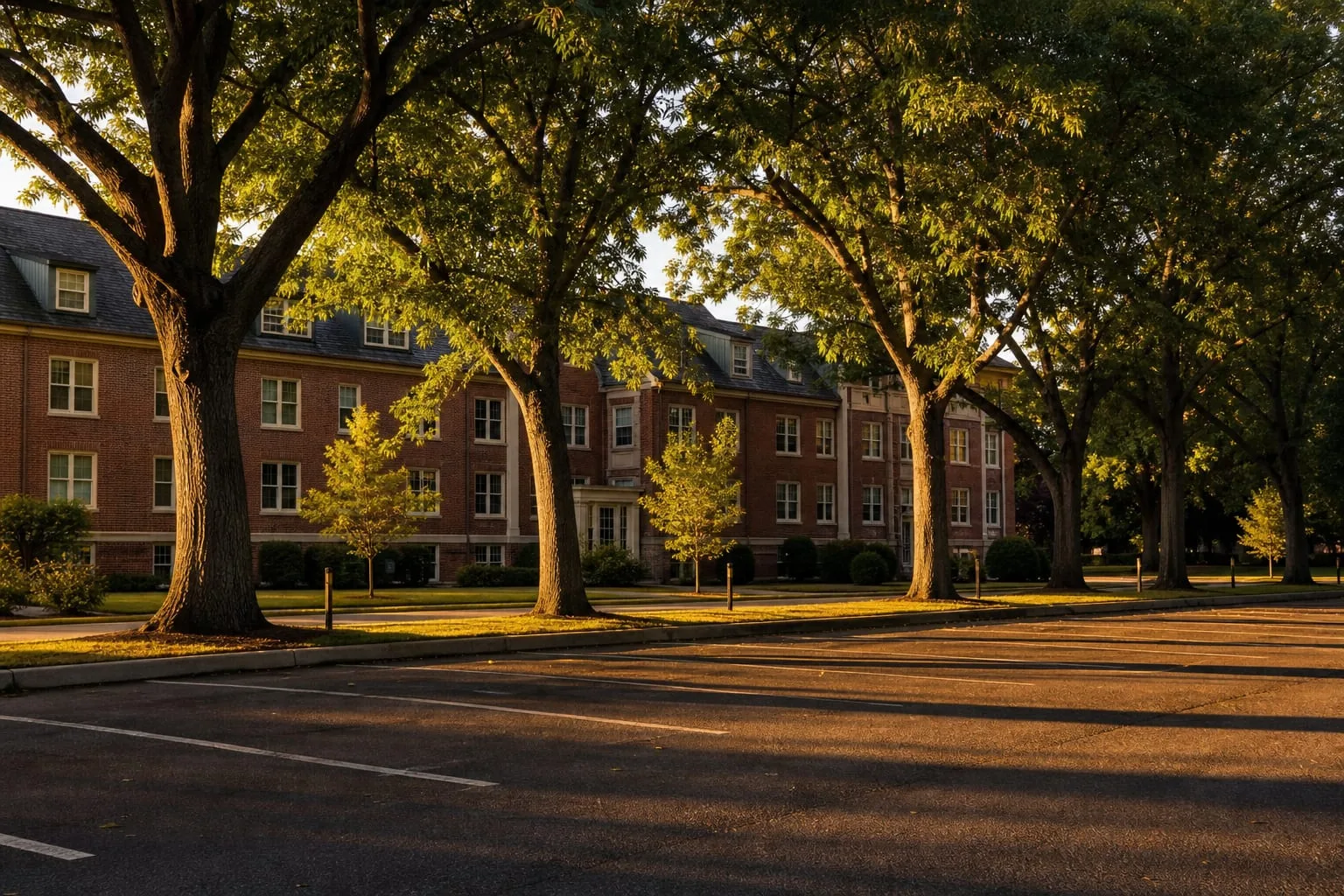
A visit answers questions about feel, and it answers them well. Whether the buildings are close enough together to get between classes in ten minutes, whether the town is walkable, whether the dining hall is somewhere a student would linger, whether the science building smells like a place where work happens: these are real and they matter to whether somebody stays. No amount of reading substitutes for standing in the middle of a quadrangle in February and deciding whether four years of that is appealing.
What a visit cannot do is tell you anything about academics, because the visit is designed and staffed by people whose job is enrollment. The tour route avoids the least attractive buildings, the guide is a cheerful sophomore selected for exactly that quality, and the information session is a presentation. That is not a criticism, since every institution does it and would be foolish not to, but a family that leaves a visit with a strong opinion about the quality of the engineering program has formed that opinion from decoration.
What the Published Numbers Can Actually Carry
Outcome data is the opposite: unhelpful about feel and genuinely informative about a narrow set of facts. Four year and six year graduation rates are meaningful, because a school where a substantial share of students do not finish is telling you something about advising, affordability, and fit that no tour will mention. Retention from the first year to the second is the single most useful figure published, since it measures how many students arrived, looked around, and left. A school that keeps its first year students is doing something right that no brochure can claim credibly, and one that loses a fifth of them is describing a problem it will not name.
The figures that get quoted most are the ones to treat carefully. Average starting salary depends entirely on which graduates responded to the survey and which majors the school happens to offer, so a campus heavy in engineering will out earn a campus heavy in education regardless of teaching quality. Placement rates often count anybody employed or enrolled in further study within some window, which sweeps in a graduate working a job they could have had at eighteen. Neither number is fabricated, and neither means what a reader assumes.
What a Current Student Knows and Nobody Else Does
A student one or two years in is the only source with access to the texture of the place, and the texture is where most disappointment lives. Whether the required courses in a major actually run every semester or only in the fall, whether the advisor answers email, whether the popular introductory class is taught by somebody who wants to be there, whether the campus empties out at weekends: none of this appears in any publication and all of it shapes four years.
The limitation is sample size. One student is one experience, filtered through their major, their year, their housing, and whether they are having a good month. Two students in the same major produce a far more reliable picture than one student in a different one, and the question worth asking is not whether they like it but what specifically has been frustrating, since people will describe a frustration accurately while describing satisfaction in generalities. Two or three short conversations produce a far more reliable picture than one long one, and they cost nothing beyond the awkwardness of asking a stranger a direct question.
Matching the Question to the Source
The sorting is simpler than it sounds. Questions about atmosphere, distance, and whether a student can imagine living there go to the visit. Questions about whether students finish, whether they come back after the first year, and how much debt they leave with go to the published figures. Questions about how the program actually operates go to somebody inside it. Asking a tour guide about graduation rates or a spreadsheet about whether the advisor answers email produces an answer, and the answer is worthless.
Earnings questions are the ones all three handle poorly, and it is worth saying why. A school reports on its own graduates, which is a small and self selected group, while occupation level pay figures from the Bureau of Labor Statistics describe the whole national picture for the work a graduate is heading toward. For a family trying to decide whether a field supports the borrowing a degree in it requires, the national picture for the occupation is the more honest input, and the school specific figure is close to noise.
What to Do When the Three Disagree
Disagreement is information rather than a problem. A campus that feels energetic and cheerful on a Tuesday in October but reports first year retention well below its peer group is describing a gap between the recruiting experience and the enrolled experience, and that gap is worth asking a current student about directly. The visit was not lying and neither was the number. Something is happening between arrival and the following September, and it is usually money, advising, or a mismatch nobody corrected. Asking a current student what happened to the people who left is a blunt question that produces an unusually specific answer, since everybody in a cohort knows exactly who went.
The reverse pattern is equally common and easier to act on. A school with unremarkable buildings, a dull tour, strong retention, and students who complain about specific things while plainly intending to stay is a place that spends its money on the parts that are hard to photograph. Families who weight the visit most heavily systematically underrate these institutions, and it is one of the more expensive habits in the whole process. Buildings are the easiest thing to photograph and among the least expensive things to maintain, which is precisely why a recruiting budget gets spent on them.
The Number None of the Three Will Volunteer
What none of the sources leads with is the actual price for this particular family, which is the figure the entire decision turns on. Published cost of attendance is a starting point that most students do not pay, aid packages differ enormously between institutions with similar sticker prices, and the second, third, and fourth year figures are frequently higher than the first because the largest discounts appear in the offer that recruits somebody. Asking directly what happens to the package after year one is standard and answerable. Asking it in writing, before committing, turns a four year plan into something a household can check rather than something it discovers one August at a time.
Used together and kept in their lanes, the three sources cover almost everything a family needs. Stand in the quadrangle and decide whether you could live there, read the retention and graduation figures to find out whether people do, and call somebody in the major to learn what the brochure omitted. What the exercise really produces is not a ranking but a set of specific questions to put to each school, and the schools that answer those questions plainly are frequently the ones worth choosing. Standing in that quadrangle is still worth doing, and it is worth doing with the retention figure already known and a current student's number already in your phone.